A private Django backend for an image-to-canvas workflow that turns uploaded photos into palette-constrained paint-by-dots previews and print-oriented guides.
Pixxeleate combines API design, image-processing modules, storage adapters, and internal dashboard tooling in one product-oriented service. The platform supports upload-to-preview workflows, order-oriented job tracking, and manual review tools for faster testing.
The public-facing description intentionally stays architectural. Credentials, vendor secrets, and fulfillment-specific implementation details are omitted because the project is tied to a real commercial workflow.
Project Goals
Accept uploaded images and storefront preview requests through a clean backend API.
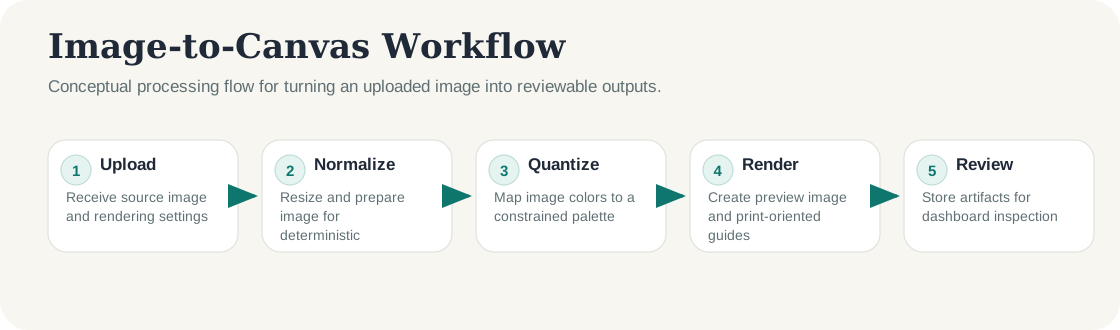
Generate deterministic previews and printable guides from palette, canvas size, and rendering settings.
Keep the same processing core usable in local development and cloud-oriented environments.
Support operational review through dashboard controls and recent job inspection.
Technical Shape
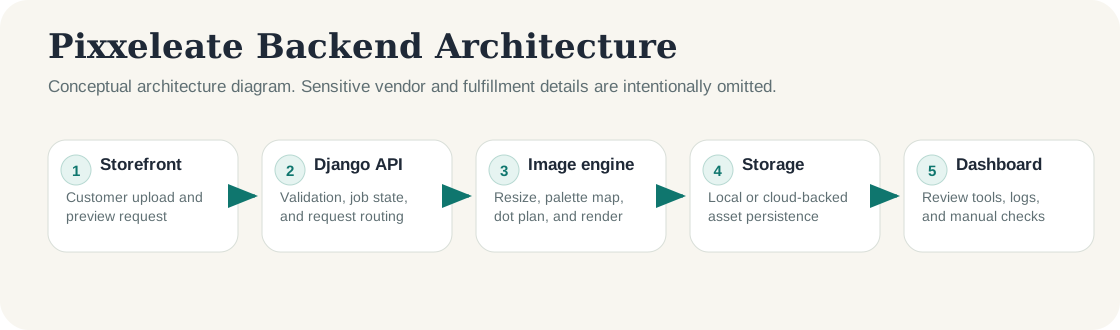
The application is built with Django and Django REST Framework. The image engine is split into focused modules for loading, resizing, palette mapping, dot-plan generation, preview rendering, and guide rendering.
Storage and metadata adapters allow the same request flow to target local files during development or cloud-backed services when configured.
Architecture Framing
The strongest public evidence for this private project is architectural: a backend API coordinates image-processing jobs, persistent artifacts, dashboard review, and external storefront events while keeping the processing core modular.
The diagrams below are conceptual and intentionally omit keys, vendor details, fulfillment rules, and sensitive operational steps.
Challenges
Balancing interactive preview speed with print-safe output quality.
Supporting local testing and cloud-oriented configuration without duplicating storage logic.
Handling event-driven order processing with validation and idempotent state updates.
Evaluation and Limitations
This is presented as product-oriented engineering work, not as a published ML benchmark. Quality is assessed through deterministic rendering behavior, reproducible processing, dashboard inspection, and workflow reliability.
The public page avoids internal business details, private repository links, credentials, fulfillment rules, and vendor-specific implementation notes.
What It Shows
Backend architectureAPI endpoints, request validation, dashboard tooling, and clear service boundaries.
Product judgmentA practical pipeline built around a real customer workflow, not a detached demo.
Visual Evidence
Conceptual backend architecture with sensitive implementation details omitted.Conceptual image-processing workflow from upload to reviewable artifacts.