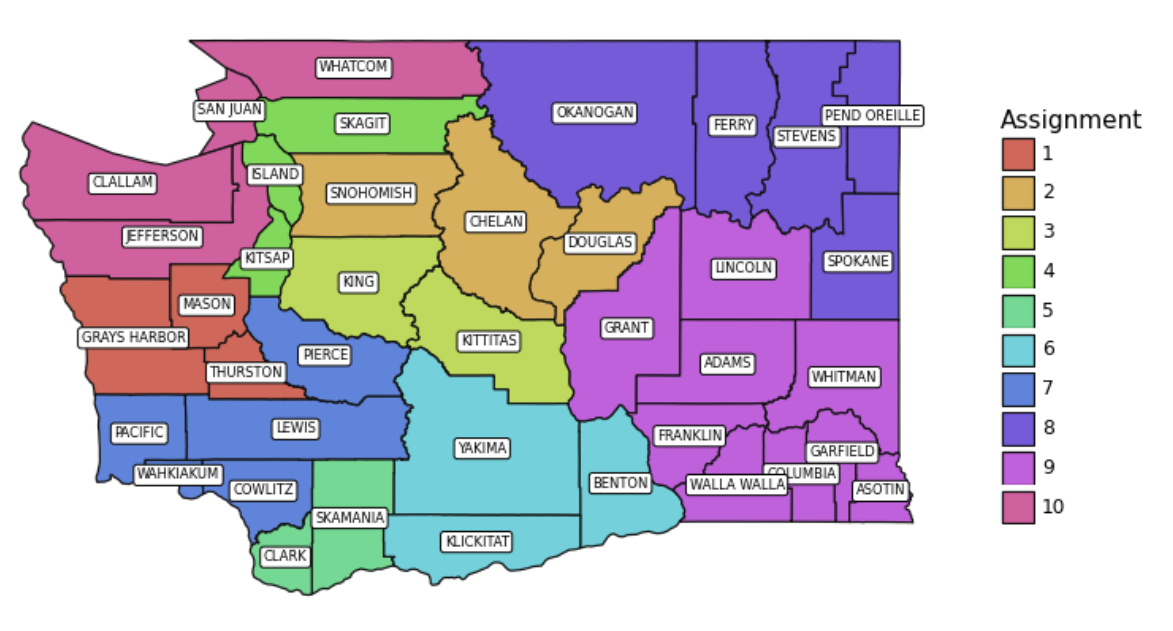
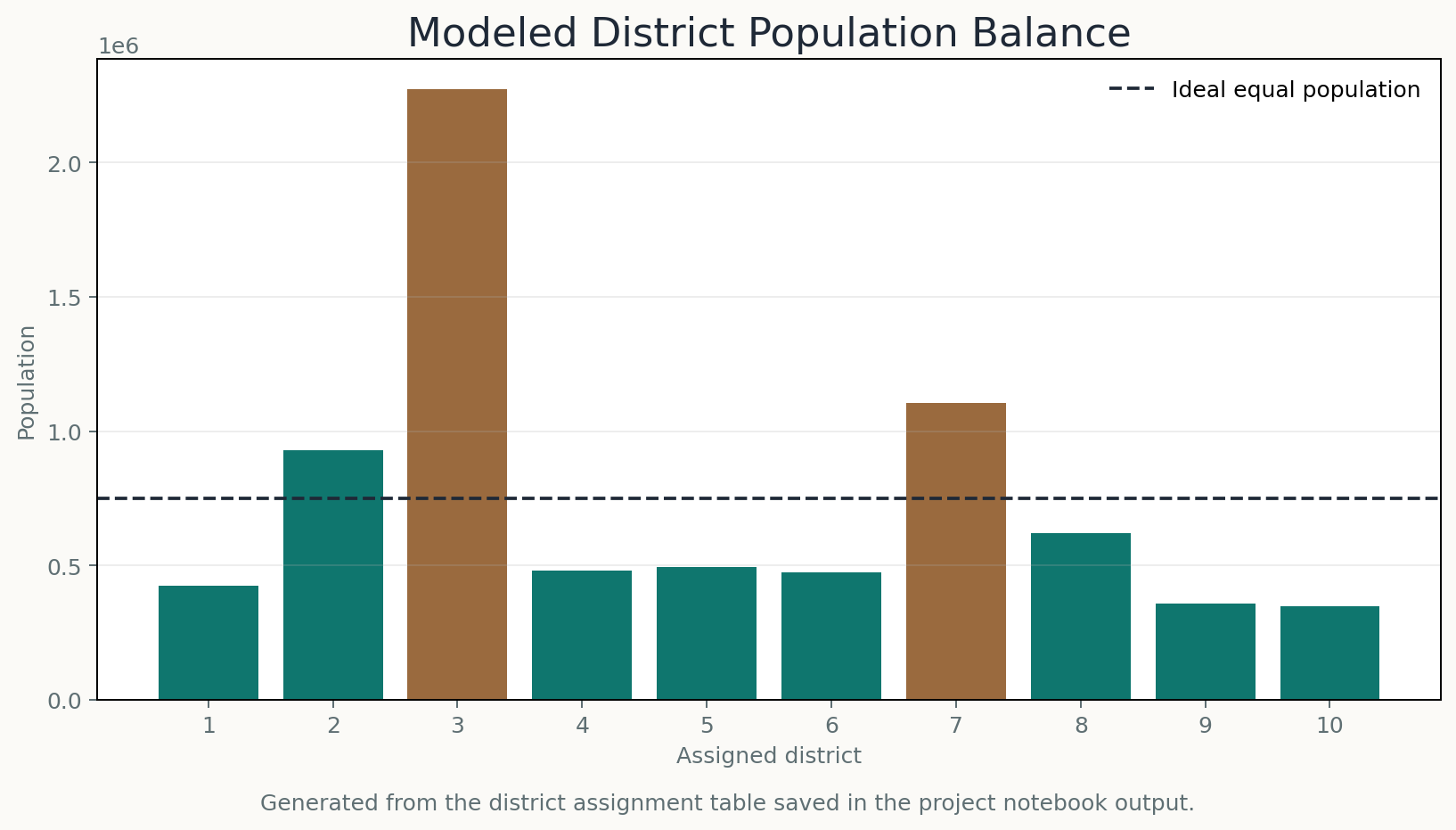
This project applied algorithmic methods to create an optimized redistricting plan for Washington State. The goal was to ensure a fair balance of population distribution across districts while maintaining electoral fairness and minimizing political bias.
Challenge: Balancing the population among districts while accounting for racial representation and geographic constraints.
Solution:
Languages/Technologies: Python, SciPy
Libraries: Pandas, Plotly, Matplotlib
Other Tools: US Census Data, Adjacency Matrices
Data Source: 2020 US Census Data for Washington State population and demographics.
Features: Total population, racial demographics, and adjacency matrix based on geographical data.
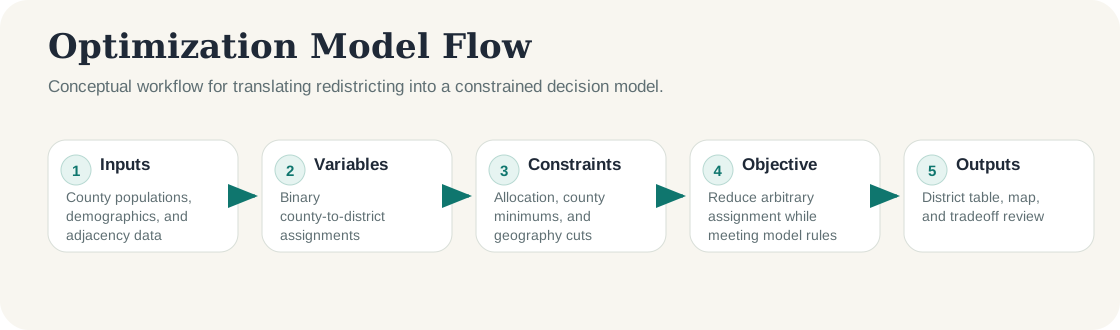
Data Preprocessing: We built an adjacency matrix for counties and calculated the population and racial composition for each district. We then applied linear programming to balance population while adhering to adjacency constraints.
Optimal Redistricting Plan: 10 districts were generated, ensuring minimal population disparities while adhering to racial balance constraints.
Explore the interactive map and additional details by clicking the link below:
Open Interactive MapThe algorithm successfully balanced population disparities while adhering to racial demographics. However, certain challenges remain, particularly in sparsely populated areas where geographical constraints limited flexibility.
The project provided a fair and balanced redistricting solution that minimized population disparities and adhered to legal boundaries. Future work could include refining the model by incorporating more granular data, such as census tract information.
View Data and Files on GitHub Back to Portfolio